

Walk into a vacant three-bedroom in Jeffersontown on a gray February morning and you’ll feel it. Empty rooms echo. Buyers stand in the doorway, do the math wrong, and decide the living room is too small. One misread like that is why sellers keep asking me what it costs to stage a house, and whether the money comes back at closing. I’ve watched it go both ways.
Is It Worth It to Stage a House in Kentucky Before Selling?
Price the house wrong and you can fix it in a week. Present it wrong and the first two weeks of showings are gone, along with the buyers who were watching your listing the day it went live.
That matters more now than it did two years ago. Greater Louisville inventory jumped 30.4% in October 2026, with 4,905 homes sitting on the Apex MLS compared to 3,761 a year earlier, according to The Lane Report. The median sale price there held at $300,000.
I’ll disagree with the standard advice here. You don’t need to stage a house in Kentucky if you’re priced below the median and your home shows clean and lived-in. Starter homes in Okolona or Valley Station move on price and condition. Decide to stage a house in the $400,000-plus bracket, though, and the calculus flips hard. Those buyers are comparing finishes, not square footage.
A couple of years ago I looked at a ranch in Shively where the family had a stager’s quote for a full install sitting on the kitchen counter. We bought it as-is, and they walked away without spending a dime chasing a return that wasn’t there.
Ask yourself a simple question: do you have the cash to carry this house for another two months if the staging doesn’t move it? Greater Louisville homes averaged 58 days on market that same October, up from 44 a year earlier. So you’re budgeting for roughly two months of mortgage, utilities, and insurance no matter how pretty the place looks.
How Much Does It Cost to Stage a House in Kentucky?
“What am I really going to spend?”
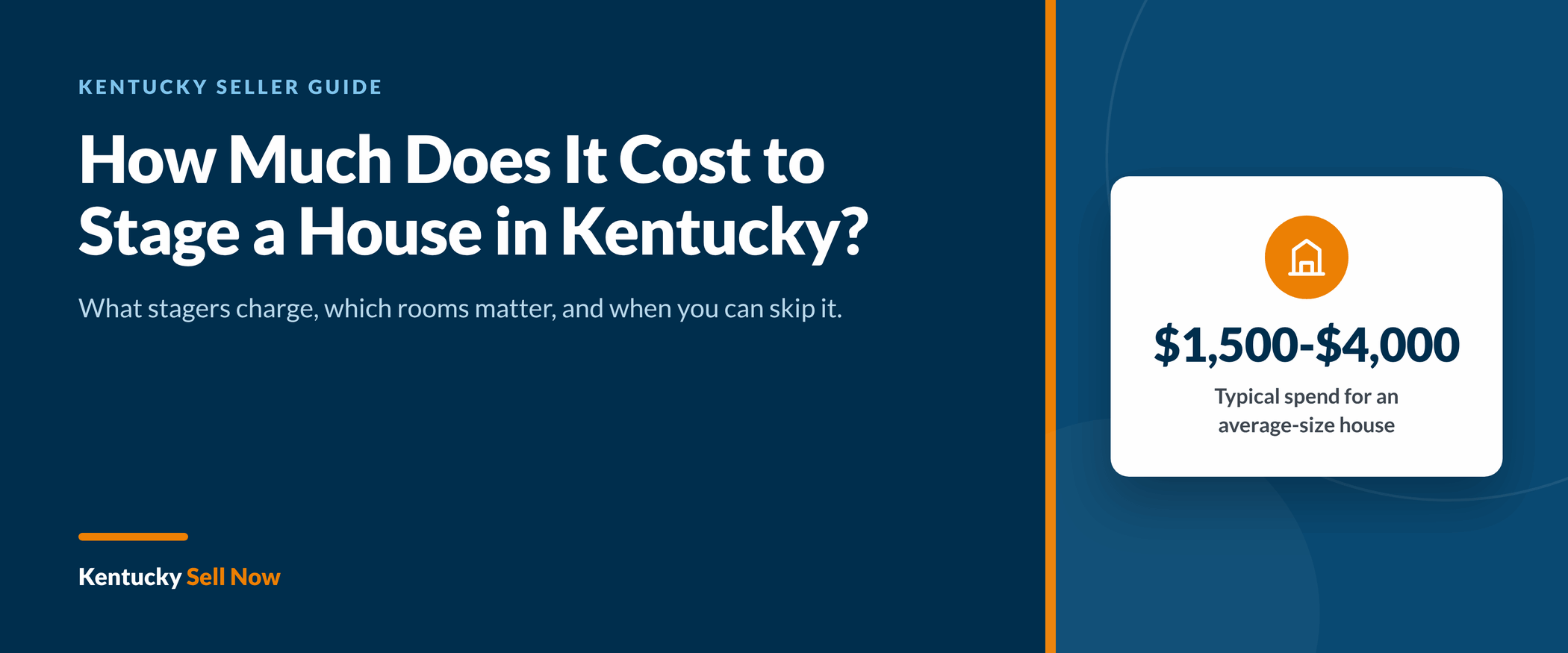
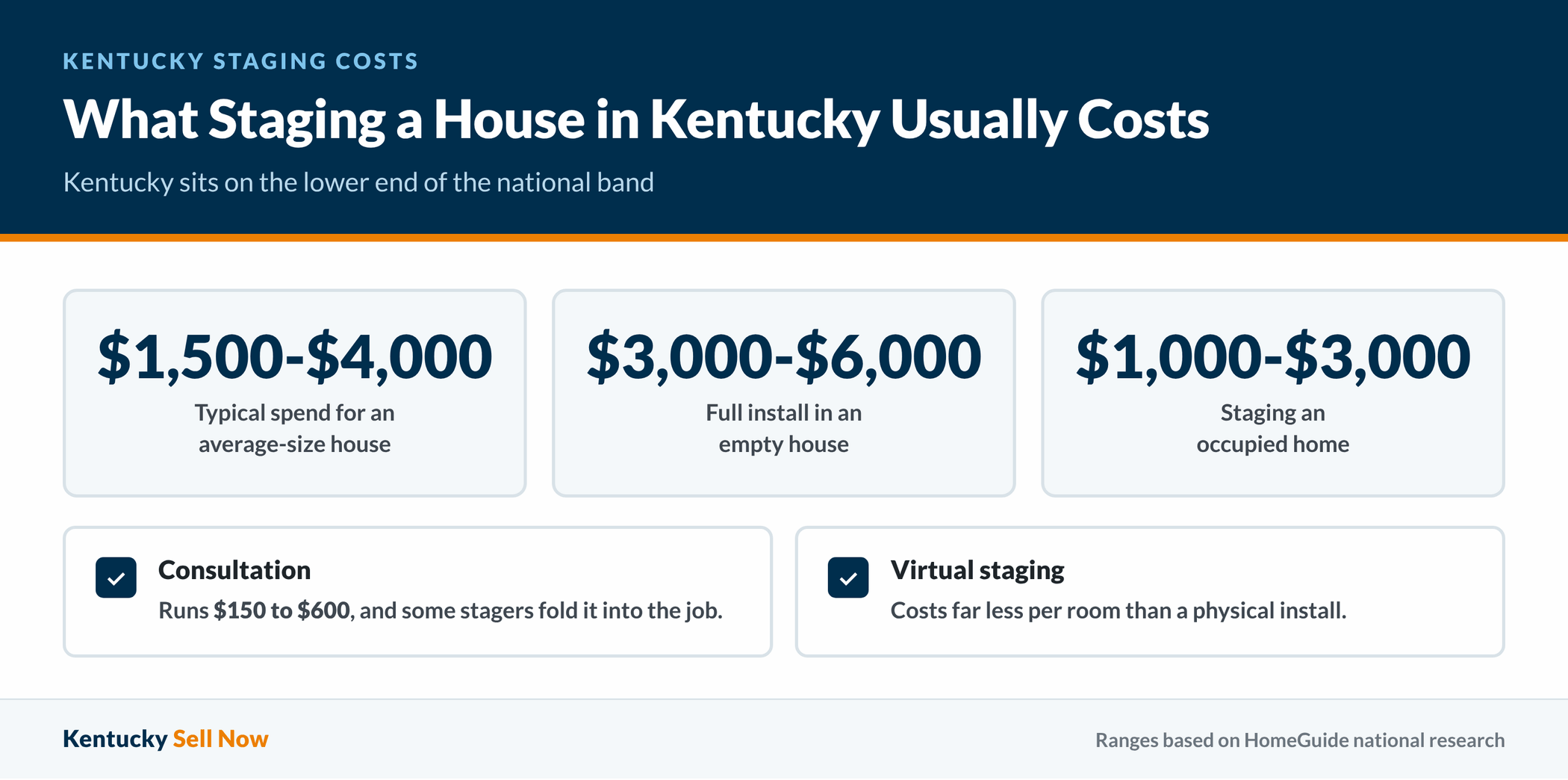
Most sellers here land somewhere between $1,500 and $4,000 to stage a house of average size, which tracks with HomeGuide’s national cost research. Kentucky sits on the lower end of that band. Labor rates and furniture warehousing costs here run well below coastal metros, and stagers price accordingly.
If your house is empty, the stager trucks in sofas, beds, rugs, lamps, and art. Later, it all gets hauled back out. That’s a $3,000 to $6,000 proposition for a full install in most of the state. Occupied homes, where someone works with your existing furniture and layers in accents, run closer to $1,000 to $3,000.
Virtual staging has gotten genuinely good, and it’s the option I’d point most sellers toward first. Digital furniture dropped into your listing photos costs far less per room than a physical install. The catch is real. Anyone who falls for the photos and walks into bare drywall feels tricked, so disclose that the images are virtually staged.
Budget for the consultation separately. The walkthrough, where a stager tells you what to remove, repaint, and rearrange, costs $150 to $600. Plenty of Kentucky stagers roll that fee into the job if you hire them. Ask for the room list and the rental period on the written quote, so you know exactly what the staging fee covers.
What Factors Affect the Cost to Stage a House in Kentucky?
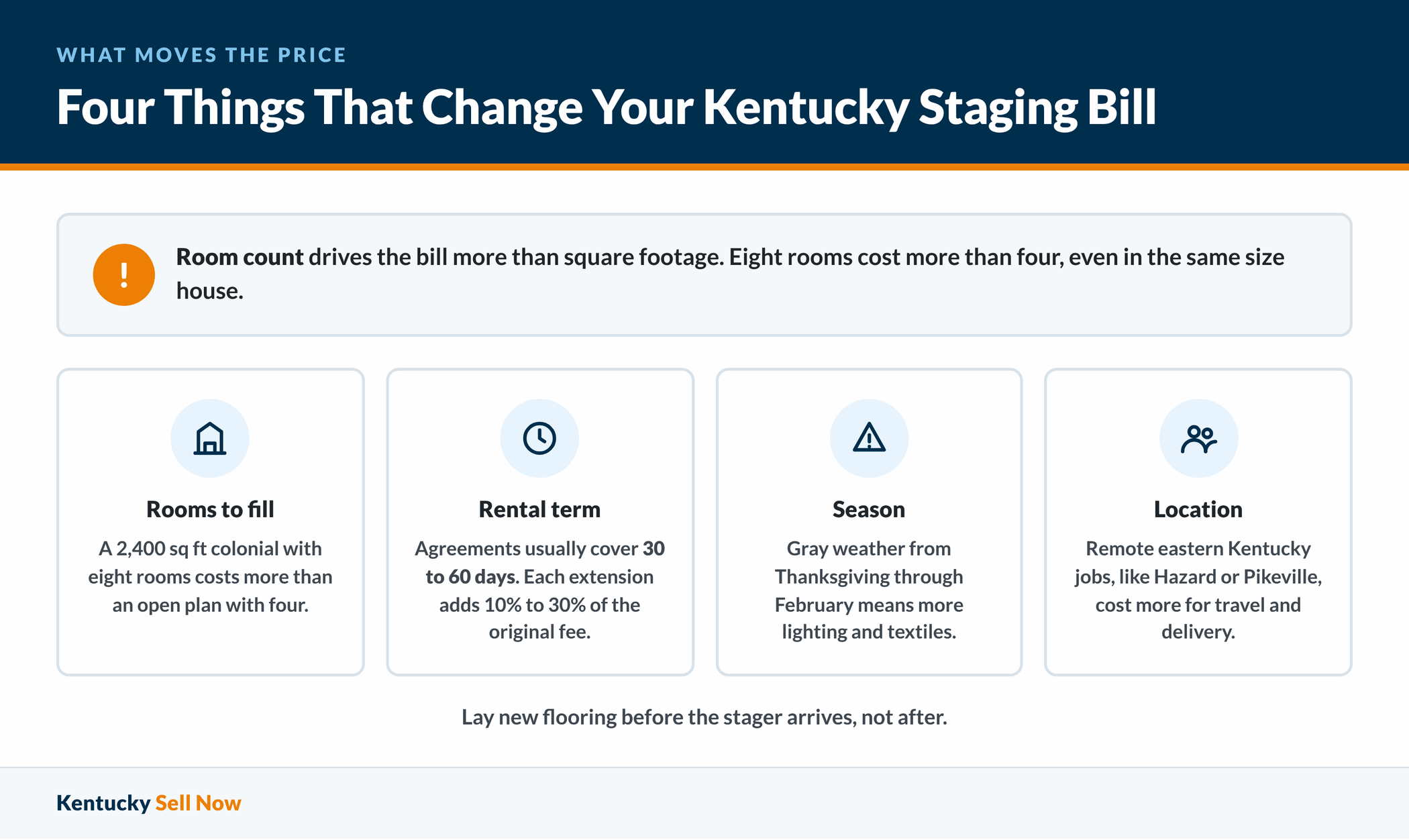
The consultation is where the variables start stacking. In my experience, room count drives the bill more than square footage does. A 2,400-square-foot colonial in Crestwood with eight distinct rooms costs more to stage a house than a 2,400-square-foot open-plan build in Nicholasville with four.
Your market matters too, and not the way people guess. Lexington homes sold at a median of $341,500 as of August 2026, per Zillow. A deeper staging investment makes sense there in a way it wouldn’t for a comparable property in Hopkinsville or Paducah. Spending four grand on a $160,000 house in western Kentucky is throwing money at a problem price could’ve solved.
The sleeper cost is how long the rental contract runs. Agreements usually cover 30 to 60 days up front. Go past that window and each extension adds another 10% to 30% of the original fee, which stings when your listing drags into month three.
Season plays in here. Winter listings across Kentucky need more lighting and warmer textiles than a May listing does, because our gray stretches from Thanksgiving through February kill natural light in north-facing rooms. Extra lamps and throws mean more inventory on the truck, and that shows up in the quote.
Condition sets a floor. No stager will make a stained carpet photograph well. I’ve watched sellers pay to stage a house that needed new flooring first, and the furniture just drew the eye to what was underneath. Fix the floors, then decide whether the house still needs staging at all.
Remote jobs in eastern Kentucky cost more. Anyone driving from Lexington out toward Hazard or Pikeville builds travel and delivery time into the quote. That premium is real anywhere outside the Louisville, Lexington, or Bowling Green orbit.
How Much Do Kentucky Staging Companies Charge Per Room?
Pricing by the room is the clearest way to buy this service. I’d steer clear of anyone quoting a flat whole-house number without telling you how many rooms it covers.
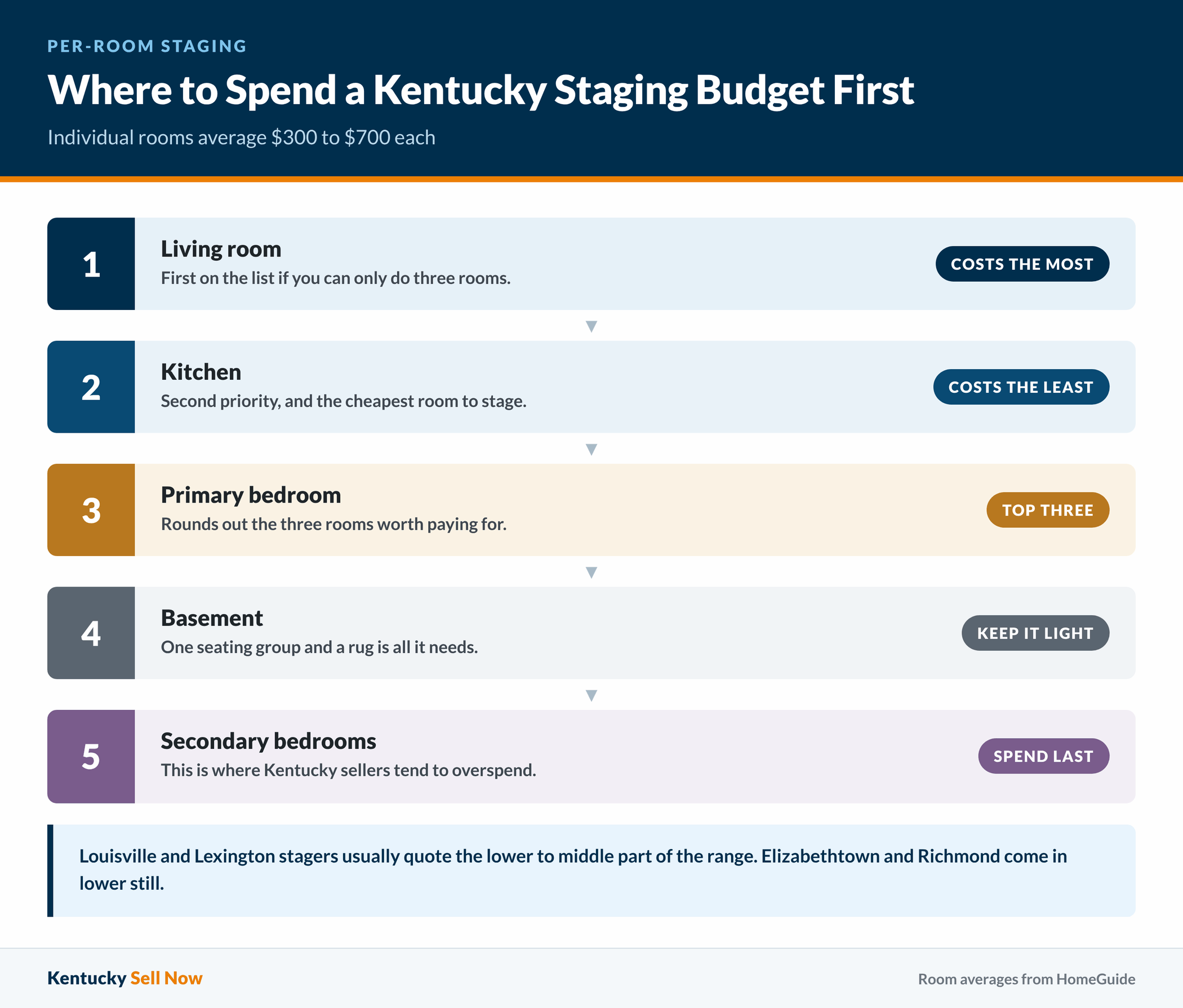
Across the industry, individual room staging runs $300 to $700 per room on average, according to HomeGuide. Stagers in Louisville and Lexington generally quote at the lower-to-middle part of that spread. Smaller markets like Elizabethtown or Richmond come in lower still.
Don’t stage a house room by room out of order. If your budget only covers three rooms, those three should be the living room, the kitchen, and the primary bedroom.
The living room carries the most weight and usually costs the most per room to fill. Kitchens are the bargain of the bunch, since cabinets and appliances already occupy the visual space. There, a stager is mostly adding counter styling and a bowl of lemons.
Secondary bedrooms are where sellers overspend. A spare bedroom with a rented bed and nightstand set adds almost nothing to the buyer’s decision in a Kentucky starter home. Put that money toward the living room, where first impressions form.
Basements deserve a word, since so many Kentucky homes have them. A finished walkout basement in Oldham County or a Bowling Green split-level reads as dead space when it’s empty. So one seating group and a rug down there does more than another staged bedroom upstairs ever will.
What Does a Typical Home Staging Package Include in Kentucky?
A widow in Bardstown called me after her stager delivered a quote she couldn’t parse. It priced every sofa and lamp separately but never said when the rental period ended or who paid to haul it all out.
Packages should spell out four things: the design plan, the inventory, the install, and the de-stage. Good Kentucky staging companies structure it exactly that way. When yours doesn’t, ask for the breakdown in writing before you sign.
The design plan comes out of the consultation. A stager photographs every room, pulls furniture from their warehouse inventory, and builds a layout per room.
Install day is one day for most homes, two for larger properties. The de-stage happens after closing or when the contract ends. Removal is usually baked into the original price, though a few outfits bill it separately, so confirm it.
The exclusions surprise people: cleaning, repairs, painting, landscaping, and professional photography. Those are yours. Deep cleaning before the crew arrives is non-negotiable in my book. I’d rather see a seller pay for cleaning and good photos than add two staged bedrooms.
Some packages bundle a photography referral or a light touch-up of curb appeal, since sellers often need both. Occupied-home packages often include a “shopping list” instead of furniture. In that case, the stager tells you what to buy at a home decor store and what to haul to storage.
Storage is the line item nobody plans for. Clearing a family’s belongings out to stage a house usually means a unit rental for a couple of months. In the metro areas, those storage rates add real dollars to your total.
Should You Hire a Professional to Stage a House in Kentucky?
An empty 1950s brick in St. Matthews sat three weeks with zero offers. The seller brought in a stager, relisted with new photos, and had two showings the following Saturday.
Industry numbers from the Real Estate Staging Association’s member reports show staged homes often going under contract within a few weeks. Those figures come from stagers reporting their own wins, so treat them as a ceiling rather than a promise.
A more grounded read: staging tends to trim some time off a sale, with wide variation from one market to the next. Against the Louisville days on market, that’s meaningful but not magic.
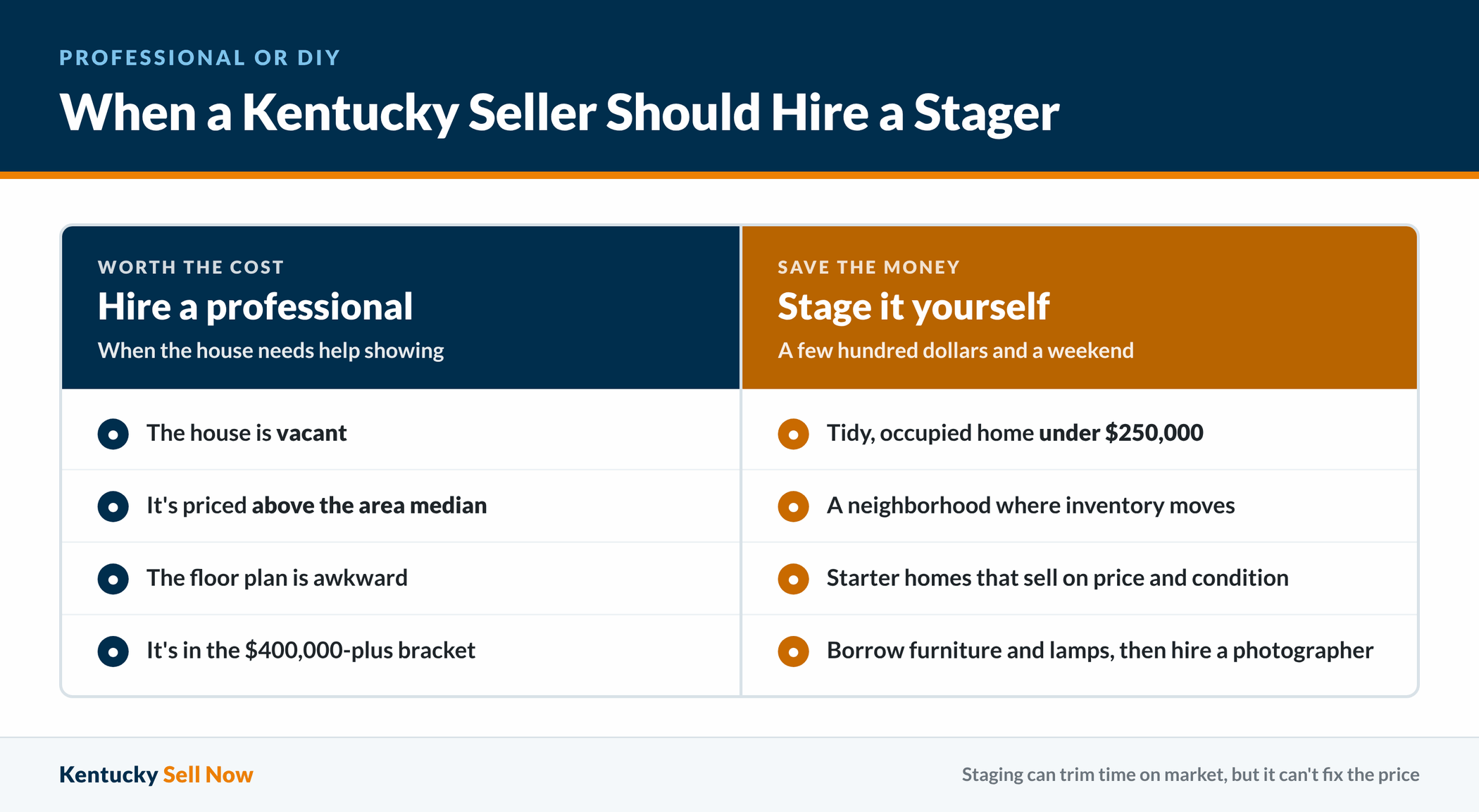
Hire a professional when the house is vacant, when you’re above the median price for your area, or when the floor plan is awkward enough that buyers need help reading it. Skip the professional when you’re selling a tidy occupied home under $250,000 in a neighborhood where inventory moves. A good cleaning and bright pictures will carry that house just fine.
Conventional wisdom goes wrong by treating staging as a universal requirement. It isn’t. A seller facing a job transfer, a divorce, or an inherited property three counties away doesn’t need a furniture install. They need a closing date. We work with a lot of those folks at Kentucky Sell Now, and buying as-is means nobody rents a sofa.
What’s your actual timeline? If you’ve got four months and equity to spend, professional staging is a reasonable bet. With six weeks and a payment coming due, the math stops working.
Can You Stage a House in Kentucky on a Budget?
“I’m not spending three thousand dollars on furniture I don’t get to keep.”
DIY staging runs a few hundred dollars and handles most of what matters in a Kentucky home under the median price. Declutter hard, remove half the furniture, swap dim bulbs for bright ones, and buy fresh white towels and bedding. Paint the one room with the bold color.
Houses built in the fifties and sixties, from Fern Creek to Ashland, tend toward small windows and dark paneling. Pulling down heavy drapes and adding floor lamps costs very little and changes every photo. I’ve seen that small swap alone shift how buyers talk about a listing. Rent-to-stage a house partially is another path: pick two rooms, rent furniture for just those, and leave the rest empty but spotless.
In most neighborhoods around the state, curb appeal returns more per dollar than interior staging. Mulch, a trimmed hedge, a power-washed walkway, and a painted front door run a weekend and a couple hundred bucks.
Borrow before you buy. Plenty of sellers I’ve worked with pulled a console table from a sibling’s basement and a pair of lamps from a neighbor.
Skip the scented candles and the bowl of fake fruit. Clean windows, a mowed yard, and empty closets do more. People notice smells and clutter long before they notice decor.
How Long Does It Take to Stage a House in Kentucky?
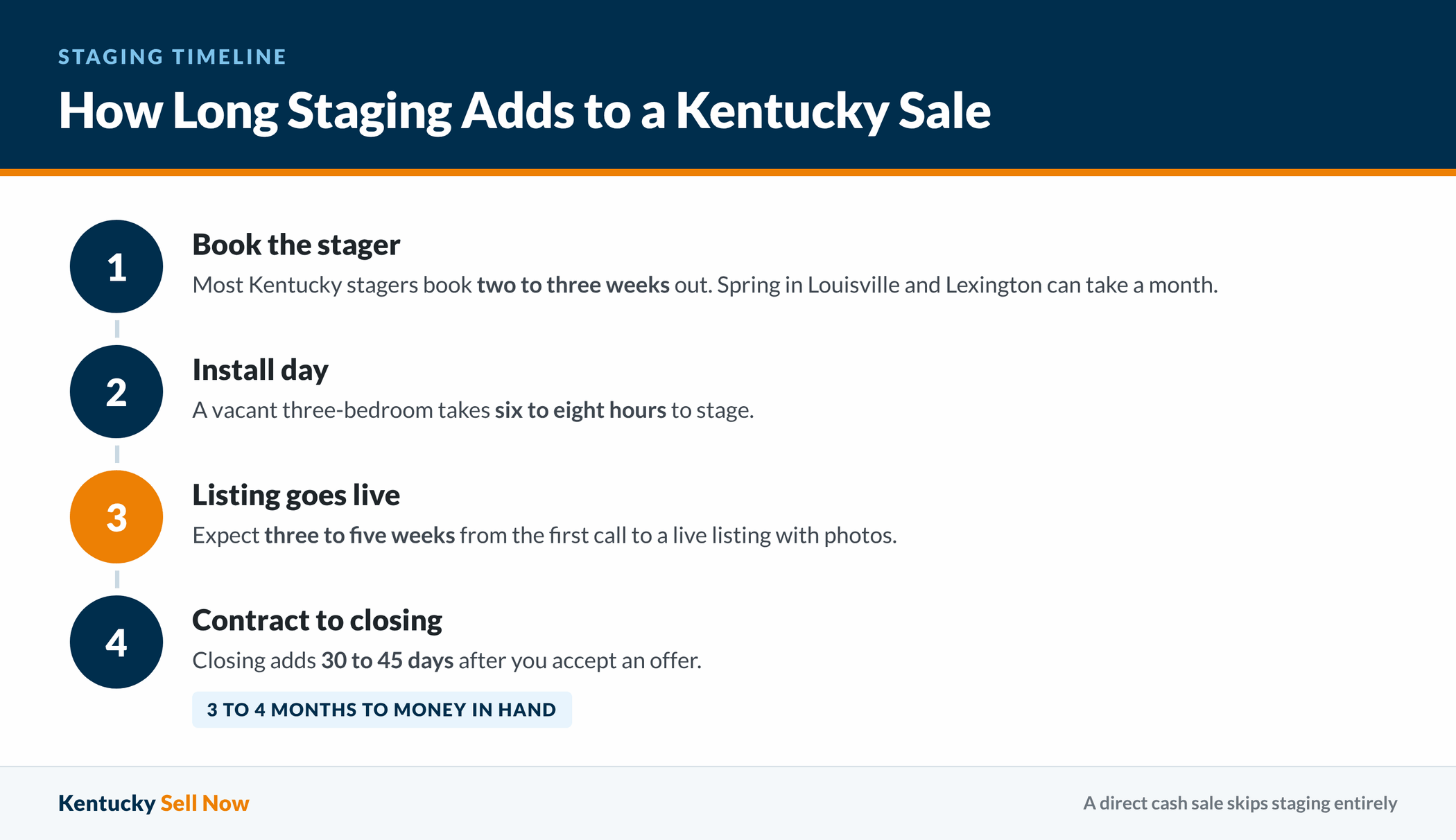
Scheduling is usually the bottleneck, not the work itself. Most Kentucky stagers book two to three weeks out. Spring booking in Louisville and Lexington can push that to a month.
The install is fast. A vacant three-bedroom gets staged in six to eight hours, and the photographer can shoot the next morning. Occupied homes take less time on install day but more time from you, since the decluttering happens before the stager arrives. Ask who handles the de-stage date, so nothing’s still sitting there after you close.
Add it up and you’re looking at three to five weeks from your first call to a live listing with good photos. Push that against the Louisville pace described earlier and the total picture gets clear. Closings then add another 30 to 45 days after a contract.
So a staged Kentucky listing that performs well still puts you three to four months out from money in hand.
Which brings me to an owner I met in Covington who had taken a job out of state and needed to be gone in five weeks. His stager’s first open date was a month out, and the garage was still stacked with moving boxes. No staging timeline in Kentucky was going to beat that clock, so we closed on his schedule instead.
Questions About What It Costs to Stage a House in Kentucky
Who Pays for Staging in Kentucky, the Seller or the Agent?
Usually the seller, though some agents cover a consultation or a few rooms as part of their marketing. Ask about it before you sign with the agent, since it’s easier to negotiate then. When the agent fronts the cost, read the contract to see whether you owe it back if the agreement ends without a sale. In a direct sale to a cash buyer, nobody pays for staging at all, because the house never needs to show.
Does Virtual Staging Work for a Kentucky Home?
It works well for vacant homes, especially online, where most people see your house first. The tradeoff is that buyers walk into empty rooms at the showing. Pair it with a spotless, well-lit house so the real thing doesn’t disappoint, and make sure your agent notes the digital furniture. It also helps an occupied home with dated pieces, since the images can swap your sofa out without anyone moving it.
Can You Sell a House in Kentucky Without Staging It?
Yes. Plenty of homes around the state sell clean and unstaged every month, especially starter homes priced right. Shoppers in that range care more about the roof, the furnace, and the price than the throw pillows. When staging doesn’t fit your budget or your timeline, a direct sale to a cash buyer skips showings altogether.
What Should I Expect to Pay to Stage a House Around 2,000 Square Feet in Kentucky?
Expect a home that size to land near the middle of the whole-house staging range described above. For a vacant home where you want every main room filled, plan for the higher end, plus extension fees on the rental if it sits. An occupied house where the stager works with your own furniture costs noticeably less. Get two quotes with the room count spelled out so you can compare them line by line.
Does Staging a House in Kentucky Guarantee a Higher Sale Price?
No, and anyone promising that is selling you something. Staging reliably helps buyers picture themselves in the space and tends to shorten market time, which protects you from the price cuts that come with a stale listing. Even a well-staged house that’s priced ten percent over the comps will still sit. No amount of rented furniture fixes a roof that needs replacing.
Can I Stage a House in Kentucky Myself and Still Get Professional Photos?
Absolutely, and that combination is the best value play for most sellers in this state. Clean hard, clear the clutter, brighten the lighting, then spend the money on a photographer who shoots real estate for a living. Good photos on a modestly staged Kentucky home will outperform mediocre photos on a professionally staged one nearly every time.
What It Costs to Stage a House Around Louisville
We buy houses in Louisville and across the state, so we see staging decisions play out from Jefferson County to the eastern counties. Greater Louisville closed 1,165 sales in October 2026, down 17 percent from a year earlier. With fewer buyers in the market, presentation matters more for homeowners across Kentucky who plan to list.
Talk With Kentucky Sell Now Before You Spend on Staging
If you’re weighing whether to stage a house in Kentucky or skip the whole production and sell as-is, we’re glad to talk it through with you. Sometimes staging pencils out and you should go for it. Other times it doesn’t, and you deserve to hear that from someone who isn’t earning a commission either way. Reach out to us at Kentucky Sell Now whenever you want a straight conversation about your options. No pressure, no obligation, and no hard feelings if you decide to list it instead.