

Four months on the market. Two price cuts. A sign in the yard that neighbors have stopped noticing. That’s usually the moment Kentucky homeowners start wondering whether they’re stuck. A listing agreement is a contract, not a prison sentence. Canceling one is usually possible.
What Does a Listing Agreement in Kentucky Lock You Into?
Sellers sign thinking they’ve hired a salesperson they can fire like any other vendor. The paperwork says something else. A listing agreement in Kentucky hands your principal broker, not your individual agent, the exclusive right to market and sell your property for a set period. Your agent is affiliated with that broker. State rules require the contract to name the principal broker and the brokerage company, and that’s who holds the listing.
When you want out, you’re not negotiating with the friendly person who took the photos.
Kentucky sellers typically sign an exclusive right to sell version. Under that structure, the brokerage earns its fee if the home sells during the term, no matter who actually produced the buyer. Your cousin, your coworker, the guy who knocked on your door: all of them trigger the commission. An exclusive agency agreement works differently and protects an owner-found buyer. In my experience, it’s far less common in Louisville and Lexington than agents will admit.
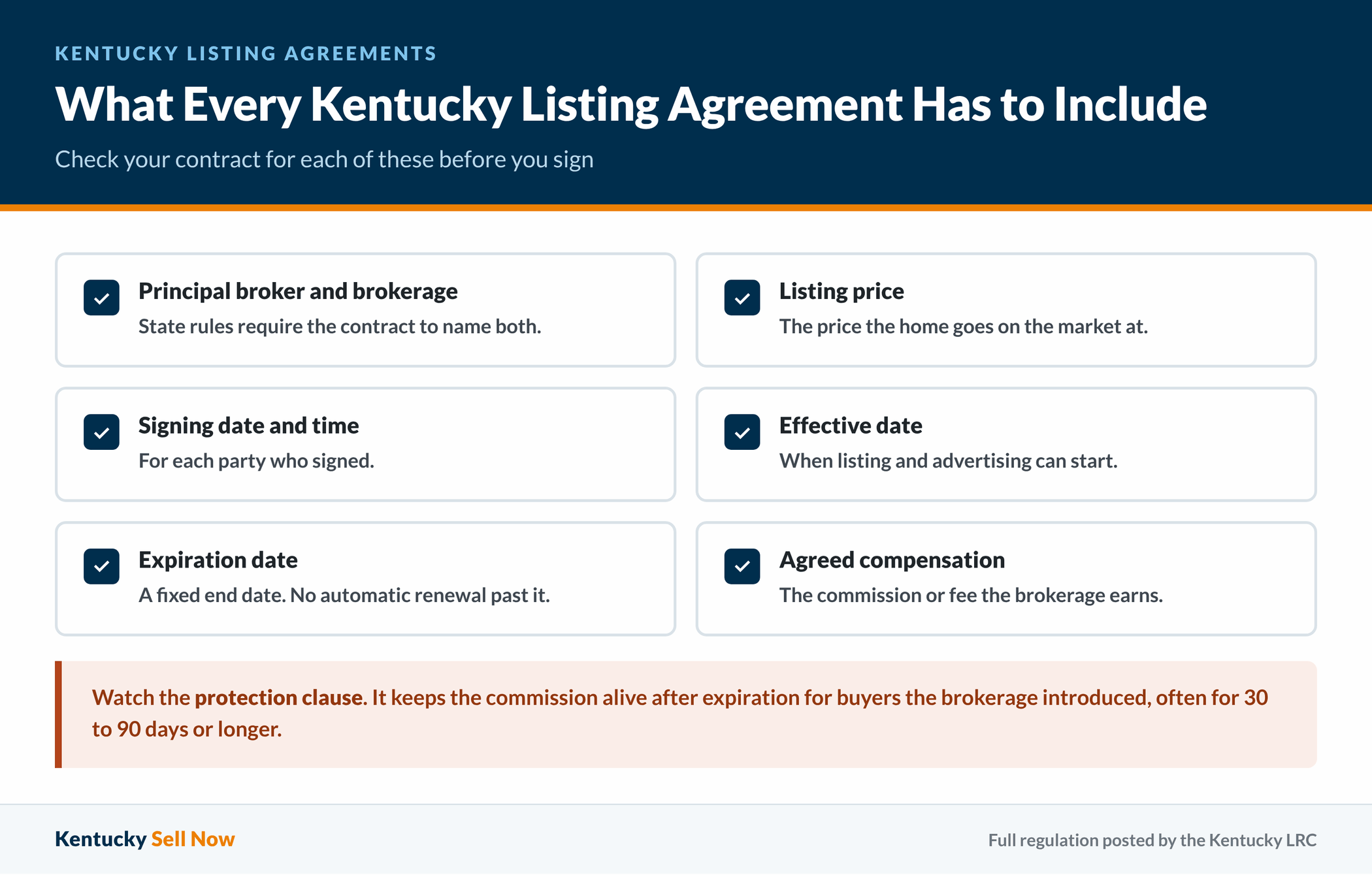
State rules also spell out what has to be in the document. A listing contract in Kentucky must include the listing price, the date and time every party signed, the effective date of listing and advertising, and the expiration date. Compensation agreed on between the principal broker and the client has to be stated too. You can read that regulation yourself on the Kentucky Legislative Research Commission site.
Look closely at the protection clause, which keeps the commission alive after expiration if you sell to someone the brokerage introduced. Thirty days, ninety days, sometimes longer. Read it before you sign anything else.
How Long Does a Kentucky Listing Agreement Last Before It Expires?
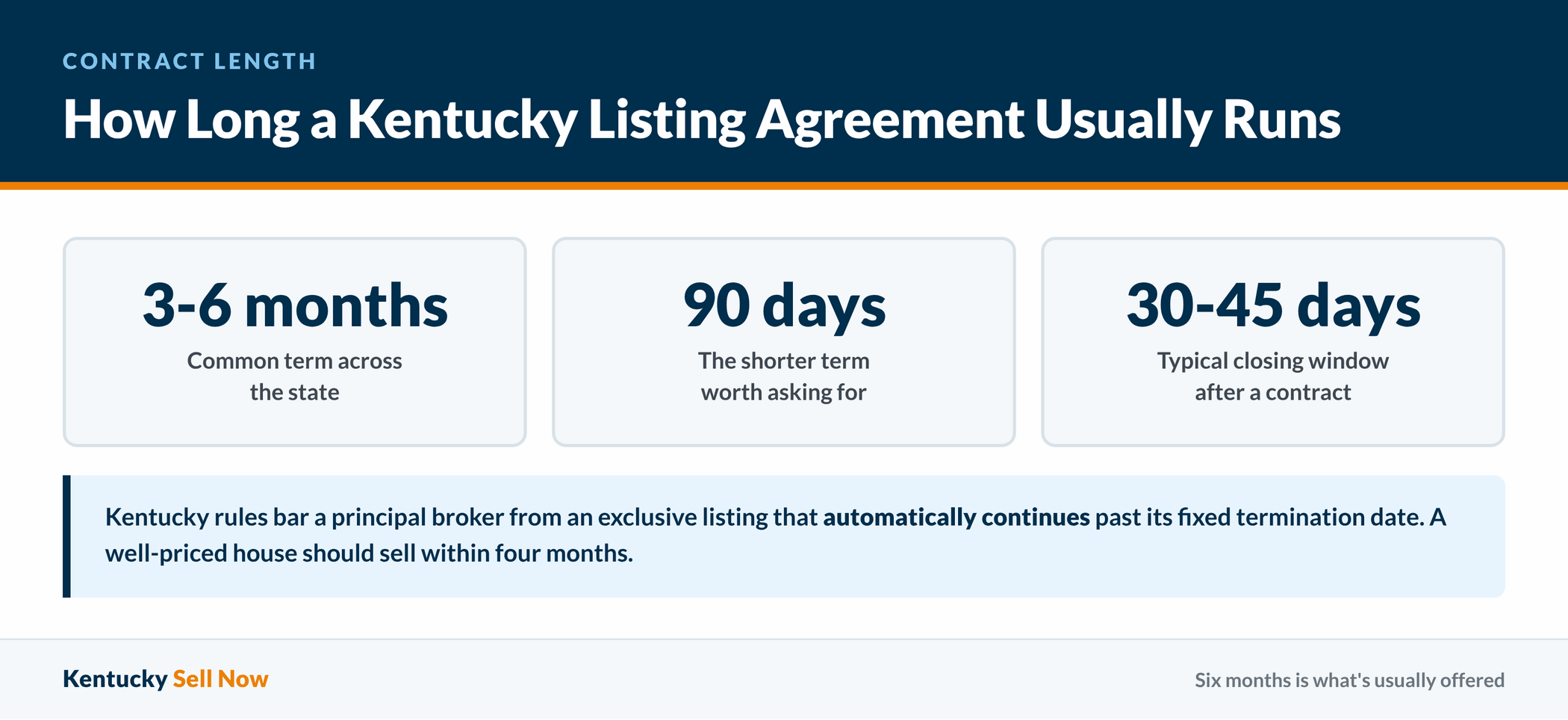
Which brings up the term itself, the number almost nobody negotiates. Three to six months is the common range, and that holds across Kentucky from Bowling Green to Northern Kentucky. Six months is usually what gets handed to you, so ninety days is what you should ask for instead.
State rules bar a principal broker from being party to an exclusive listing contract that automatically continues past the fixed termination date written into it. No rolling renewal, and no quiet extension when you’re not paying attention. If yours runs out in March, it’s done in March unless you sign something new.
Does a six-month term make sense given how fast homes move here? Greater Louisville homes sold at a $300,000 median in October 2026, and they averaged 58 days on market, up from 44 a year earlier. Even adding a typical 30 to 45 day closing window, a well-priced house in most Kentucky markets should be sold inside four months. A six-month listing agreement buys the brokerage padding you don’t need.
Lexington moves quicker. Zillow put the city’s median sale price at $341,500 as of August 2026, with homes going pending in about 10 days. Fayette County sellers signing half-year terms are giving away leverage.
A couple of years ago I bought from a young couple in Shively who were three months behind and already had an auction date circled. Their contract with the agent had two months left. He had gone quiet, and the garage still held the crib they’d never assembled. We worked around the existing agreement rather than ignoring it, and they walked away from the closing table with cash instead of a foreclosure on their record.
What Are Valid Reasons to Cancel a Listing Agreement in Kentucky?
Most well-priced houses here sell within a couple of months, so a house in Bardstown sitting at 120 days with no offers isn’t bad luck. Something’s broken. Price, condition, marketing, or all three. A listing that sits that long usually needs a new plan, and sometimes a new broker.
Your broker owes you work, too. State regulation obligates a principal broker to deliver specific services once a written agreement is in place, unless the client has waived or modified those duties in writing. No photos on the MLS, no returned calls, no showings scheduled: that’s where a service argument turns real, and I’ve seen sellers realize this only after weeks of silence from their agent.
Solid reasons to cancel a listing agreement here include several of these:
Brokers who won’t communicate for weeks at a stretch. Listings that never appeared on the MLS or appeared with wrong information. An agent who pushed you into a price you now know was wrong for your Covington or Owensboro neighborhood. Pressure tactics around offers. A change in your own life: a job transfer to Nashville, a divorce filing, an inherited property you’ve decided to keep.
Financial pressure counts too. Sellers facing a mortgage they can’t carry often need speed more than top dollar. Any listing agreement built for a retail buyer fights against that. I’ve watched too many homeowners ride out a full listing term while their arrearage grew, then sell for less than they’d have netted five months earlier.
Know your real deadline, not your hoped-for date. When the mortgage company has a timeline, say so to your broker up front, because that one fact changes the whole conversation about releasing you.
Can You Cancel a Listing Agreement with a Broker in Kentucky?
Send a polite written request and you’ll often get a signed release within days, along with your keys back from the lockbox.
Yes, with one important qualifier: cancellation is a mutual act unless the contract itself gives you a unilateral exit. There’s no statewide right of rescission for this kind of agreement the way there is for certain consumer contracts. What you have instead is a negotiation with the principal broker, and most of them say yes.
Reputation explains most of it. Brokerages live on referrals from Anchorage to Paducah, and an unhappy seller forced to stay on the hook is exactly the story a broker doesn’t want circulating. Dragging an unwilling client through a listing agreement rarely produces a sale anyway.
Your contract may already contain the exit. State rules make property management agreements spell out a method for early termination. Many brokerages carry similar termination language into their listing paperwork voluntarily. So pull out your copy and look for a cancellation clause before you call anyone.
Something worth knowing if you’re already shopping for a replacement agent: before your current listing agreement expires, another licensee can’t contact you to get a subsequent listing. You may start that conversation yourself, though. The new agreement can’t take effect until your current one ends, and the Seller-Initiated Listing Form has to be signed. Either way, the first move has to be yours.
How Do You Legally Terminate a Listing Agreement with a Kentucky Broker?
Most sellers underestimate how binding these contracts actually are. An heir in Richmond wanted out after a flooded crawlspace sank two sales. She sent one email, got nothing, and assumed she was free. It turned out she wasn’t, and the brokerage billed her later.
That’s the whole lesson.
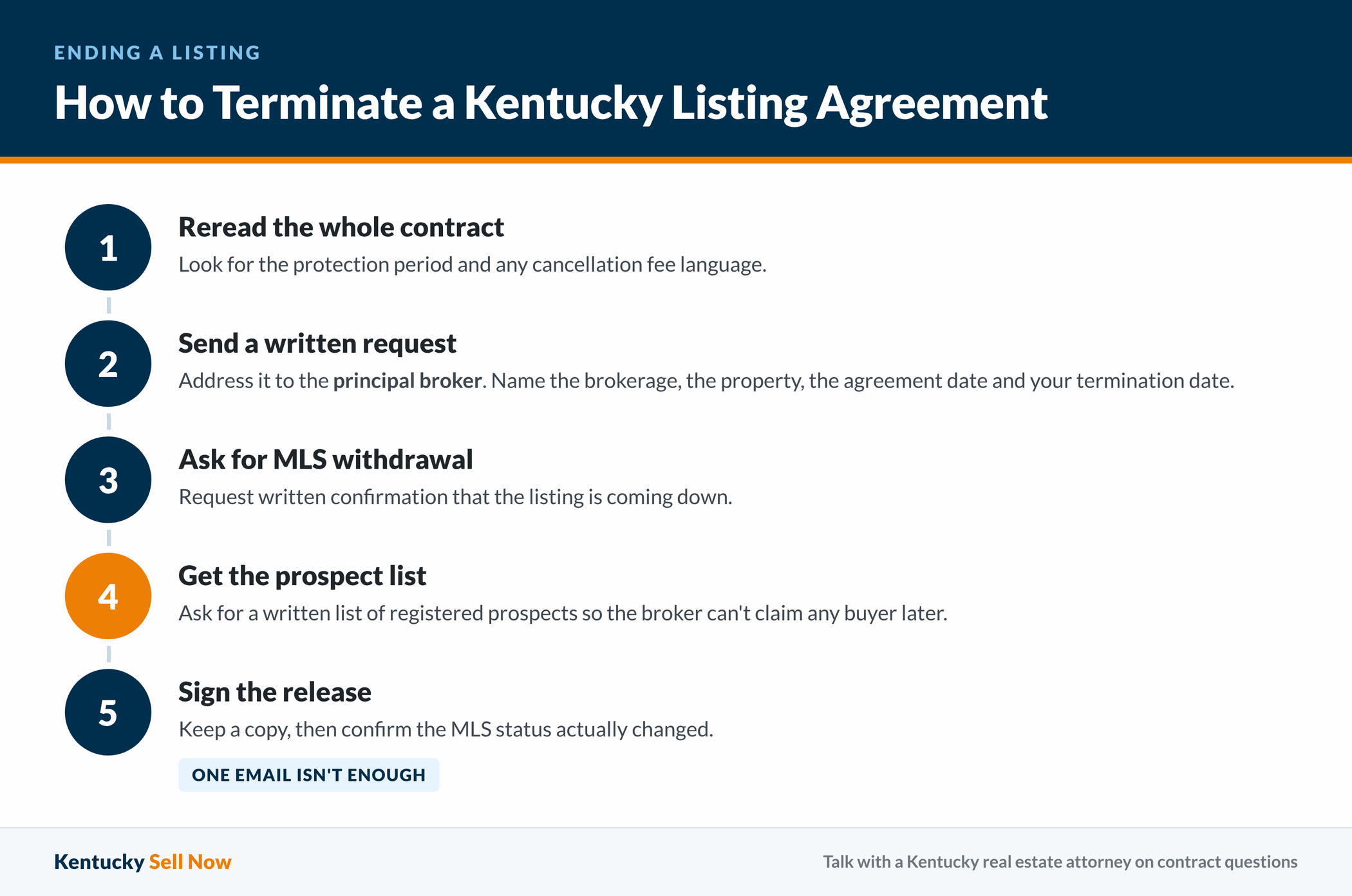
Start by rereading it front to back, including the protection period and any cancellation fee language. Then put your request in writing to the principal broker, not just your agent, since the broker holds authority over the listing. Name the brokerage, the property, the agreement date, and the date you want the termination effective. Ask specifically for the listing to be withdrawn from the MLS and for written confirmation.
Push for a release that covers the end of the brokerage’s authority to market your home and the handling of any protection period. If a protection period survives, ask for a list of registered prospects too. Without a named list, a broker can later claim any buyer was theirs.
Kentucky brokerages generally use a cancellation or release form. Sign it, keep a copy, and confirm the MLS status changed.
If talks stall and you believe your broker violated state conduct rules, the Kentucky Real Estate Commission handles consumer complaints against licensees. The process starts with an original notarized Complaint form 300, completed in full and mailed to KREC. You must file within one year of when you knew or should have known the facts behind the complaint. KREC disciplines licensees, but it doesn’t void your contract for you. For contract questions, a real estate attorney is the better first call. Several sellers I’ve worked with used a release negotiated with the broker rather than a complaint, and that path is faster.
Does Canceling a Listing Agreement Cost You Money in Kentucky?
Most sellers who cancel a listing agreement in Kentucky pay nothing, and anyone telling you otherwise is usually protecting their own paycheck.
Still, costs do exist. Some brokerages recover hard marketing expenses: professional photography, drone footage, staging rental, printed brochures. Expect a few hundred dollars at most, and a request for anything close to a full commission on a house that never sold deserves pushback.
Broker fees here are a matter of agreement between you and the principal broker, so the rate, the calculation, and who pays are all open to discussion. That negotiability applies to cancellation terms too. Nothing stops you from striking a marketing-reimbursement clause before you sign a listing agreement.
Then there’s the cost nobody invoices you for: time. Inventory in the state’s largest metro hit 4,905 homes in October 2026, up from 3,761 a year earlier, according to The Lane Report. Every month a stalled listing agreement sits idle with the wrong strategy, you’re paying a mortgage, taxes, and insurance on a house you’ve mentally left.
Sellers in a genuine time crunch sometimes skip the relisting cycle once their listing agreement ends. A direct sale to a local buyer like Kentucky Sell Now removes commissions and repair demands from the equation, which is worth comparing against another six months of showings.
What Happens If a Broker Refuses to Release You From a Listing Agreement?
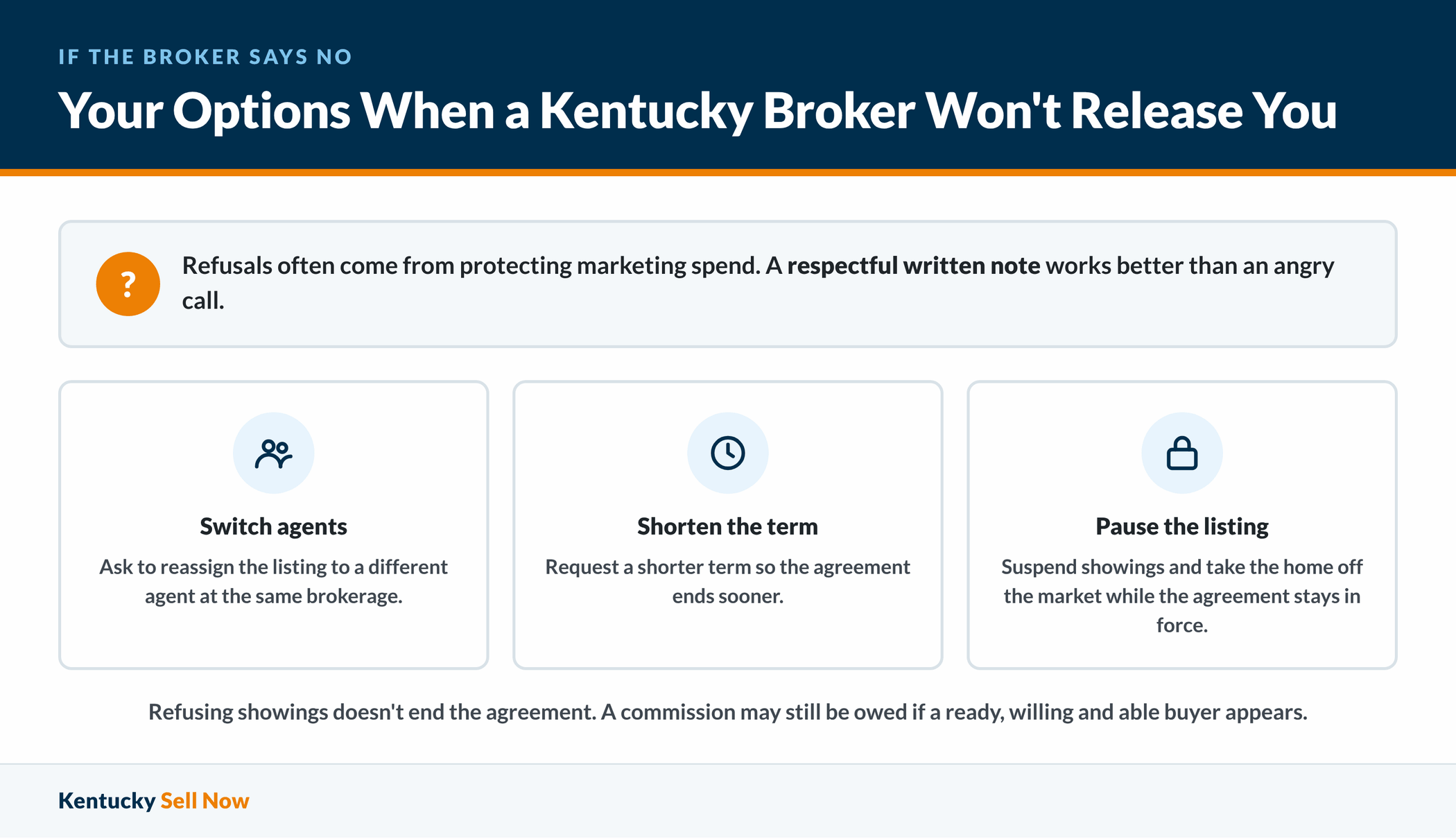
You still have options even if that first conversation doesn’t go your way. Brokers who refuse are usually protecting the marketing dollars invested in your listing or reacting to how the request was made. Tone changes outcomes. A written note that credits their work and offers a fair wind-down beats an angry phone call every time.
When refusal sticks, there’s still room short of a lawsuit. Ask for a different agent inside the same brokerage, since principal brokers can reassign the listing without canceling it. You can also request a shortened term instead of an outright release. Another option is suspending showings and taking the listing temporarily off-market, understanding the agreement itself stays alive.
Refusing showings doesn’t end a listing agreement. Under an exclusive right to sell listing, the brokerage may still claim a commission if a ready, willing, and able buyer materializes. A seller who refuses to sell after the agent produces a satisfactory buyer can still owe the fee, depending on the contract’s terms.
Commissions on both sides of a sale add up to a large share of your equity. Letting a listing agreement expire naturally and then selling independently can keep real money in your pocket, provided the protection period has run.
Consult a Kentucky real estate attorney before you take any step that could be read as breach. One hour of legal advice costs far less than a disputed commission.
What Should You Check Before Signing a New Listing Agreement in Kentucky?
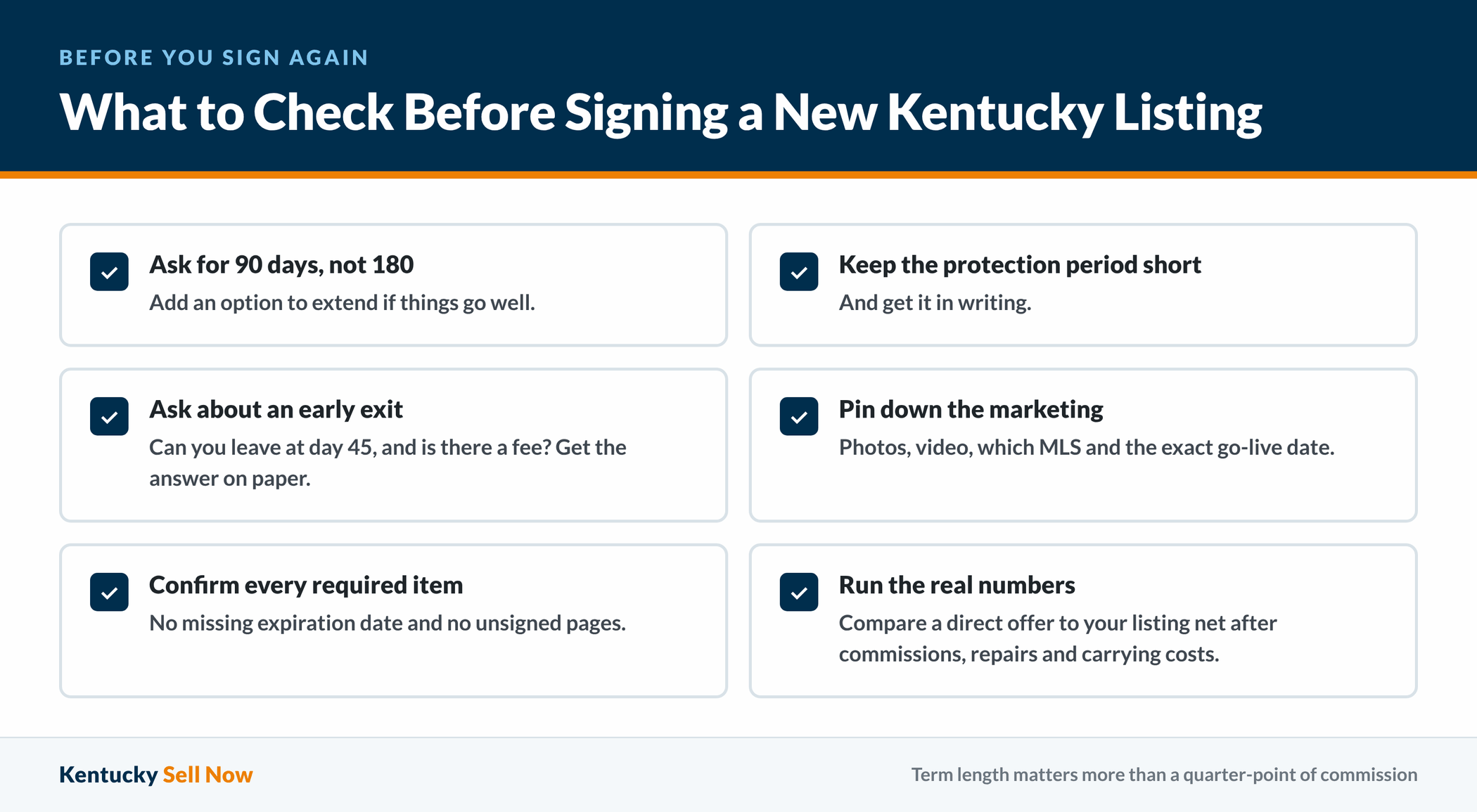
The term length and the protection period shape your freedom far more than a quarter-point of commission ever will.
Before you sign the next one, get these nailed down. Ask for 90 days, not 180, with an option to extend if you’re both happy. Get the protection period in writing and keep it short. Ask what happens if you want out at day 45, and whether the listing can end early without a fee. Get that answer on paper rather than as a verbal promise.
Pin down the marketing too: the number of photos, whether there’s video, which MLS the brokerage uses, and the exact date the listing goes live. Vague answers before you sign turn into silence afterward.
Check that the document includes everything the state requires. Any missing expiration date or unsigned page creates problems for both of you later.
Weigh the listing path against alternatives with clear eyes. Louisville sellers received 97.6 percent of list price in October 2026, down from 98.1 percent, and months of inventory rose from 3.0 to 3.9. Listing is still the right call for a clean, updated house in a strong school district. For a dated property with deferred maintenance, the math shifts.
A woman in Henderson reached out last spring while settling her father’s estate. She’d inherited a duplex, spent two seasons chasing partial rent payments, and told me plainly that she had no interest in being a landlord, especially one three hours from her own kitchen. Her father’s woodworking bench was still in the basement when we closed. We bought the duplex as it stood, and she never signed a listing agreement at all.
Comparing a direct offer against what a listing would realistically net you, after commissions, repairs, and carrying costs, is just good arithmetic.
Frequently Asked Questions About Canceling a Listing Agreement in Kentucky
What Is the Most Common Reason Kentucky Sellers Cancel a Property Listing?
Communication breakdown wins by a mile, followed closely by pricing disagreements. Sellers rarely cancel over one bad week. They cancel after months of unanswered texts, showings that never got scheduled, and feedback that never arrived. Pricing is the other big one, especially when a seller realizes the number was set to win the listing rather than sell the house. Life changes like job relocations and family health situations round out the list.
Can You Cancel a Real Estate Listing Contract Once You’ve Signed It?
In most cases yes, though cancellation generally requires your principal broker’s agreement unless your contract spells out a unilateral exit. Read your paperwork first, since many Kentucky brokerages build in termination language. Put your request in writing to the principal broker and ask for a signed release confirming the brokerage no longer has authority to market the property. Verbal agreements have a way of evaporating when a commission is at stake.
Is It Better to Cancel a Kentucky Listing or Withdraw It?
They’re different animals. Withdrawing pulls your home off the market, but the listing agreement with the brokerage stays in force, so the commission obligation survives if you sell during the term. Canceling ends the agreement itself. Withdrawal makes sense if you need a short pause and plan to return with the same agent. Cancellation makes sense when the relationship isn’t working or you’re changing direction.
Does a Protection Period Still Apply After a Kentucky Listing Agreement Ends?
Usually, yes, and this surprises sellers who assume expiration wipes the slate clean. If a buyer toured your home during the listing agreement and then buys after it ends, the brokerage can claim its fee during whatever protection window your contract states. Request a written list of registered prospects when the agreement terminates. Buyers not on that list generally fall outside the claim.
Can I List with a New Kentucky Broker Before My Current Agreement Expires?
Yes, if you start the conversation yourself and the new contract waits until your current one ends. The rules covered above bar another licensee from soliciting you during your current contract, and the seller-initiated form has to be completed and signed. Ask any prospective agent whether they’re familiar with that form. The good ones will be.
Your Listing Agreement Options Around Louisville
We buy houses in Louisville and across the state, and we talk with sellers stuck in stalled listings every month. Greater Louisville closed 1,165 sales in October 2026, down 17 percent from a year earlier. Fewer closings means more homeowners across Kentucky are weighing whether to wait out their current contract or try another route.
Get a Straight Read From Kentucky Sell Now
If you’re weighing whether to ride out your current listing agreement or try a different route, we’re happy to talk it through with you. No pressure, no obligation, and no commission on our end. Call us at Kentucky Sell Now or reach out through our contact page. We’ll give you a straight read on what your Kentucky property would bring in a direct sale, so you can compare it against staying listed.