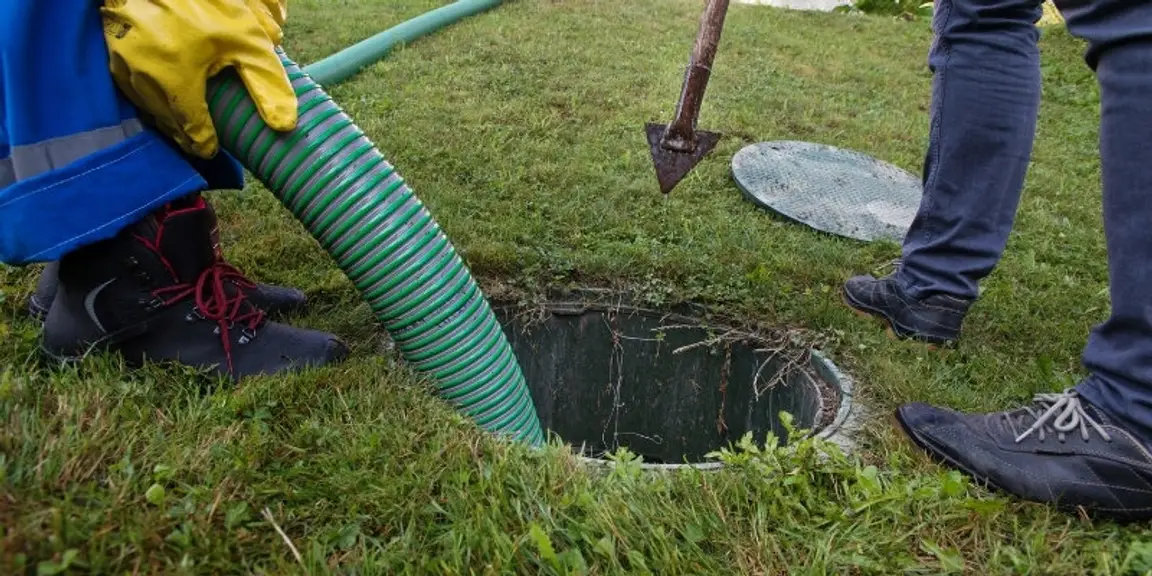


A backhoe parked in the side yard tells buyers more than any listing photo ever could. Selling a house with septic tank problems works that way. A private nuisance goes public, and a routine closing turns into a talk about dirt, pipe, and soil ratings. I’ve bought houses all over Kentucky with tanks that were fine, tired tanks, and a few systems that quit years before anybody called me. Every one of them sold. The road just looked different depending on what sat under the yard and how much time the seller had.
Septic Problems and Your Kentucky Home Sale: What’s Ahead

Kentucky keeps an electronic record of on-site wastewater systems, and it holds more than most sellers expect. Permit dates, system type, install date, even the latitude and longitude of the tank. Site evaluations, inspection dates, and what shape the system was in the last time somebody looked. That database comes from KRS 211.350, and the cabinet releases the data upon request. So your property may already have a written history on file. You just haven’t read it.
Statewide, the median sales price hit $285,000 in August 2026, up 3.6 percent from a year earlier, Kentucky REALTORS® reported. Supply sat at 5.19 months, and homes closed about 2.1 percent under asking, according to the August release. Listings sold fell 18.4 percent year over year. Read that as buyers having more to pick from. Selling into that market, a septic problem costs you more, not less. The buyer can look at the clean house down the road instead.
Geology matters here more than in most states. The Kentucky Geological Survey puts well-developed karst under roughly a quarter of the state. Limestone near the surface. Sinkholes. Water moves through rock rather than soaking into dirt. A drainfield needs soil for filtering. Rock two feet down kills that, and plenty of Kentucky properties sit right on it.
The Short Answer for Kentucky Sellers
Yes, you can sell it. Nobody condemns a house over a soggy leach field, and no Kentucky law bars the sale of a property with a bad septic system.
What changes is your buyer pool and your price. Cash and conventional buyers can close on a broken system if they’re willing. Government-backed financing gets messy, and that alone thins out the Saturday crowd.
A while back, I bought a place in Shelbyville from three adult children whose father had moved in with the family. They’d rented it out for two years and hated every minute of it. The last tenant left a chest freezer, a riding mower, and a septic system that backed up every time it rained hard. They didn’t want to spend another dollar on it.
The real choice looks like this. Fix it and list it. List it as-is at a price that reflects the problem. Or sell it outright to a buyer who takes the system as it sits. All three are fine. The one that isn’t is listing at full retail, hoping nobody notices, then burning six weeks before an inspection ends the contract.
Disclosure isn’t a strategy you opt into. Kentucky’s Seller’s Disclosure of Property Condition, KREC Form 402, asks what you know about the property, and completing it satisfies your duty under KRS 324.360. Section 8 covers sewer. It isn’t a warranty, and it doesn’t replace an inspection. It does put your knowledge on paper.
What Is a Septic System and How Does It Work?
Everything that leaves the house lands in a buried tank, usually concrete. Solids sink, grease floats, and baffles keep the layers from mixing back together. The liquid in the middle, called effluent, flows through a distribution box into the drainfield, a network of perforated pipes laid in gravel trenches. Soil does the real treatment work as the water filters down.
Two parts fail, for two different reasons. Tanks crack, rust, or fill with sludge nobody pumped out for fifteen years. Drainfields die slowly, choked by a biomat, tree roots, or years of water the soil can’t take.
Sizing follows bedroom count, not square footage. A four-bedroom farmhouse in Nelson County running on a tank sized for two bedrooms was never right, even if it limped along for decades.
Soil is the whole ballgame. State rules sort soil into texture groups and give each group a daily loading rate, which is a dry way of saying some ground drinks water and some ground won’t. Where it won’t, you need an engineered or alternative system instead of a standard gravity setup. Steep hollows in eastern Kentucky bring their own trouble, since there’s often nowhere flat enough to lay a field.
Basements add a wrinkle. When a system backs up, the lowest drain in the house is where sewage shows up first, and I’ve watched that stop a walk-through cold.
Kentucky State Septic Tank Regulations and Requirements Explained
Picture calling Frankfort about your septic paperwork. The state writes the rules, sure, but the person who reads your soil, issues your permit, and signs off on the work sits at your county or district health department. That’s who you’ll work with, start to finish.
The standards are outlined in 902 KAR 10:085, which establishes uniform rules for the construction, installation, and alteration of on-site sewage disposal systems. A companion rule, 902 KAR 10:110, covers permits. It sets a $50 on-site sewage disposal permit fee due with your application, in addition to any fee your local board of health has adopted.
Permits go to certified installers. A homeowner can pull one for the house they actually live in, but only one in any five years, repairs aside. That rule has teeth for sellers. A system your uncle put in with a rented excavator and no permit is a system with no record, and no record leaves a buyer’s lender nothing to check.
Selling doesn’t trigger one statewide inspection mandate. What is required at closing comes from lenders, buyers, and the county health department policy. Your county health department will tell you what they want for your property, and that call is free.
How to Install a Septic Tank in Kentucky
For years, I figured the permit was paperwork you chase while the dirt is already moving. Backward, and it can cost a seller a closing.
You start by filing for a site evaluation with your local health department. Somebody digs backhoe pits so the evaluator can read the soil profile. By statute, the health department finishes that site evaluation within fifteen working days of getting your application. If they need more from you, the rule gives them another ten working days after you send it in.
The health department sends back a report rating the site. Suitable or provisionally suitable means a system can go in, and the rating also determines what kind of system the soil will carry.
Only after that does the construction permit issue, and no part of the system gets built before it’s in hand. The permit expires one year from the date of issue unless the cabinet grants an extension. So a permit pulled early and then ignored while a sale drags on can run out before the work ever starts.
The install gets inspected before anything is backfilled. Your installer calls the health department’s certified inspector before the trenches close because once they’re covered, they’re coming back up.
Electric service trips people up. For structures built after July 15, 1998, an electrical inspector can’t sign off on permanent wiring without a final notice of release from the local health department. Counties that adopted the Uniform State Building Code and run their own on-site sewage permitting are exempt, so ask yours.
Budget time, not just money. Between the evaluation, waiting on the soil to dry, and getting a certified installer booked in a busy spring, a new system can take two months before it costs a dollar.
Why Do Septic Inspections Matter in Kentucky?

A septic inspection is the cheapest leverage a seller can buy. Most people skip it because they’re afraid of the answer.
Who orders the inspection changes everything. Order it yourself, and you control the timing, you pick the company, and you learn what’s wrong while every option is still open. Let the buyer order it during due diligence, and you find out on their schedule, with a clock running and a repair estimate written by somebody with no reason to keep the number small.
A real inspection means pumping the tank, checking baffles, running water to watch how the system handles flow, and probing the drainfield for saturation. Lifting a lid and peering in is not an inspection.
Kentucky does not issue a uniform point-of-sale septic certificate, unlike a few states. What buyers ask for ranges from a pumper’s receipt to a full evaluation letter from the health department. Ask your REALTOR® what sellers in your market have been asked for lately, because the answer in Boone County isn’t the answer in Pulaski County.
Here’s what sellers underrate. A clean inspection report attached to your listing ends the discount talk before it starts, because buyers price the unknown at worst case. A report showing a working system, recently pumped, with a healthy field, replaces guesswork with facts. I’ve watched that swing a number by several times what the inspection cost.
What Are the Signs of Septic System Failure?
Replacing a tank when the drainfield is still good usually runs $3,000 to $7,000 in 2026. Replacing the whole thing, including the new field, often runs $10,000 to $25,000 or more. One part splits those numbers, which is why the early signs are worth reading correctly.
Slow drains all over the house, not one fixture, point at the system rather than the plumbing. Gurgling in the toilet when the washer empties says the same thing.
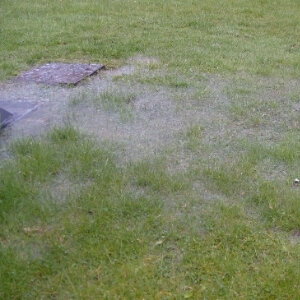
Standing water or spongy ground over the drainfield should get your attention today. Grass that stays bright green over the lateral lines in August, while the rest of the yard cooks, means effluent is surfacing instead of soaking in.
Smell gives away a failing septic system fast. Sewage odor in the yard after rain, or around a basement floor drain, means wastewater isn’t going where it should.
Then there’s the backup itself. When sewage backs up into a tub or a basement drain, the system has failed, and every flush makes it worse.
One pattern I keep running into. An owner pumps the tank, gets six good weeks, and decides the problem is solved. Pumping empties a tank. It does not repair a dead field.
What If My Septic System Is Too Small or Just OK?
A seller in Nicholasville called me about a ranch she’d added onto in the nineties, turning a den into a fourth bedroom. The system worked fine for her and her husband. The county record showed a tank permitted for three bedrooms.
That gap is a live issue in a sale. An appraiser or a lender’s reviewer who compares bedroom count to permitted capacity can flag adequacy, which is a different question from whether the thing works today. A system can run fine and still be undersized on paper.
You have honest options. Correct the record if the system really was enlarged and never logged. Market the house at the bedroom count the permit supports. Or disclose the gap and let the buyer price it.
What I’d avoid is advertising four bedrooms on a three-bedroom permit and letting the closing table sort it out, because that turns a clean sale into a dispute.
A system that’s merely “just OK” still needs a plan. If the tank is sound and the field is tired, ask an installer whether the lot has a repair area, meaning ground that the health department would approve for a new field. A property with one is worth more than a lot boxed in by a driveway, a pond, and a neighbor’s fence. The buyer can see a way forward.
Can You Sell a House with Septic Tank Problems in Kentucky?
Get this part wrong, and you lose weeks, not just money. A contract that dies at the inspection puts your listing back out with days-on-market baggage, and buyers read a re-listed house as damaged goods.
Price cuts are already common statewide. Redfin reported that 21.6 percent of Kentucky homes saw a price drop in August 2026, up from 18.0 percent a year earlier. A septic problem found mid-contract lands you in that group, usually at a steeper cut than you’d have offered up front.
Selling with a known problem works when you build the plan around it from day one. Disclose in writing. Get a repair offer or two so the number in the buyer’s head is real rather than scary. Decide ahead of time whether you’ll credit at closing, escrow funds for the repair, or price the house accordingly.
Financing is where the road forks. Conventional lenders have room to move. FHA is stricter, and HUD Handbook 4000.1 tells the appraiser to visually observe the septic system for signs of failure or surface evidence of malfunction. Readily observable problems mean repair or further inspection. That’s a condition you have to clear, not an automatic no.
Cash buyers change the math, since there’s no appraiser, no underwriter, and no financing in the chain. That’s the lane we work in at Kentucky Sell Now, and it’s why a failing system doesn’t worry us the way it worries a retail buyer holding an FHA pre-approval letter.
How Do You Sell a Home with a Failed Septic System in Kentucky?
“If I sell as-is, am I just handing somebody a discount for nothing?” Fair question. The answer is math, not principle. Compare your net after a full replacement, carrying costs, and a longer stretch on the market against your net from an as-is sale today. Sometimes repairing wins. Sometimes the as-is sale does.
Repair-then-list makes sense when the fix is contained, the weather cooperates, and you can float the cost. A new field reopens the house to every buyer, including FHA, VA, and USDA loans, which matters in rural counties where those loans account for much of the volume.
As-is with full disclosure suits sellers who have equity and no appetite for construction. Expect a smaller pool of buyers and a longer wait. Louisville shows why that’s harder than it was. The Greater Louisville Association of Realtors put August 2026’s median sale price at $300,000, up 1.2 percent, with 4,490 homes on the market against 3,377 a year earlier, as WHAS11 reported. Days on market went from 38 to 46, so a house with a problem now competes against a lot more clean ones.
Selling direct to a cash buyer is the third road. The honest trade is speed and certainty for top dollar. No appraisal, no repair escrow, no financing contingency, and a closing date you pick. That trade looks the same whether you’re working with cash house buyers in Lexington, KY, or a buyer in a small county seat.
Estate properties and out-of-state owners often land here. When heirs in Ohio inherit a house outside Berea with a dead system, lining up offers from three counties away won’t work. We take those calls as a company that buys houses in Lawrenceburg, KY, and in other Kentucky markets, too.
Whatever you pick, keep every record. Pumping receipts, permits, the site report, letters from the health department, and contractor offers. A problem on paper reads as a known quantity. One with no paper reads as a mystery, and buyers price mysteries harshly.
Frequently Asked Questions
Do I Have to Disclose a Septic Problem When Selling in Kentucky?
Yes, if you know about it. Kentucky’s seller disclosure form asks directly about the sewer system, and knowingly concealing a defect can expose you to claims after closing. Disclosure protects you, too. A signed acknowledgment from the buyer beats a hopeful silence.
Can I Sell a House in Kentucky with a Failed Septic System?
You can. No state law forbids selling a property with a failing system. The obstacles are practical rather than legal: financing, buyer appetite, and whether the local health department has an open enforcement action on the property.
Will a Buyer’s Lender Require a Septic Inspection?
With a conventional loan, the lender often defers to the contract. FHA, VA, and USDA loans are stricter, and appraisers are told to flag observable evidence of failure. Cash buyers skip the question entirely.
How Much Does a New Septic System Cost in Kentucky?
Site conditions drive the number, which is why two houses on the same road can get repair estimates that differ by thousands. Soil group, lot access, and whether the drainfield survived are the big three. Engineered and drip systems run higher. Get two estimates before you settle on a figure.
How Long Does a Septic Permit Take in Kentucky?
Timelines vary by county and by season. Soil work, permit issuance, and scheduling a certified installer can take from a few weeks to a few months, longer if the ground is saturated or the health department is backed up. The statutory clock covers only the site evaluation, not the whole job.
Is a Failed Septic System a Transaction Breaker?
Only for some buyers. Investors, cash buyers, and plenty of conventional borrowers go ahead anyway. What usually kills a sale is surprise and uncertainty, not the system itself.
If you own a Kentucky property with a septic issue and you’re tired of guessing what it means for your sale, we’re glad to talk it through with you. We’ll give you a straight cash offer, explain how we arrived at it, and leave you alone if the numbers don’t work. No obligation, and no repairs on your end. When you’re ready, contact us at Kentucky Sell Now.
Helpful Kentucky Blog Articles
- Can You Sell A Rental With Tenants In Kentucky
- Can I Sell My House With A HELOC In Kentucky
- Understanding Home Equity For Selling Your House In Kentucky
- Guide To Selling Your House During Bankruptcy In Kentucky